Friday, December 31, 2010

THE DAY THE INDUSTRY CHANGED

Ben: Very interesting article about advertising American carriers

Most people will tell you that the airline industry changed 32 years ago today—the day Jimmy Carter signed the Airline Deregulation Act.


In fact, there are some people who will tell you that October 24, 1978 was the day everything that ever has changed or ever will change in the airline industry, changed.
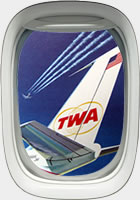
Not me. For my money, the day the industry changed was 20 years ago, when Young & Rubicam resigned Trans World Airlines.


.
.
.
.
.
Read more @  http://fly.cameronfleming.com/2010/10/the-day-the-industry-changed/#more-516

Strategic and execution failures make AirAsia scale back India operations


Earlier this year, many an Indian waited with expectation while all Indian carriers waited with trepidation as the Malaysian low cost behemoth  AirAsia, announced and commenced flights to a slew of cities across the nation.

Fast forward six months, and the Indian carriers are breathing easy as AirAsia is quietly withdrawing or dramatically scaling back flight operations from many Indian cities. Hyderabad, Bangalore, Kolkata, Trivandrum, are just a few, even the Chennai-Penang flight where the carrier has a complete monopoly has been quietly withdrawn. No seats are available for booking as much as one month in advance, even though the flight is still officially listed on the  time-table.

What caused this low fare juggernaut to falter in a value concious country like India? A market so well suited for a low cost carrier, a market in which domestic low fare carriers are doing so well. It appears to be a combination of an incorrect strategy married to poor execution and a failure to adapt the AirAsia business model to meet the expectations of the Indian passenger.

Not engaging travel agents
Unlike domestic travel, foreign travel involves a variety of services in addition to the air ticket. From passports, visas, hotels, tours, to insurance, there is a gamut of services travellers need when flying overseas, and for these they rely on the travel agent. Travel agents are responsible for over 83% of the international travel bookings.

Even the largest global carriers like Singapore Airlines and Lufthansa realised the power of the travel agent in the Indian market when they tried to impose a zero commission regime and were met with stiff resistance.

The typical passenger on AirAsia would be a first time international traveller, and not well versed with the myriad of documentation and other requirements of foreign travel. many carriers and choices available in the travel market. Unlike Indian low fare carriers SpiceJet and IndiGo, AirAsia has chosen not to engage the travel agents, instead relying on a single call centre.

Ignoring corporates
The Chennai Penang route is a perfect example of the airline's failure to engage with potential customers business. Even with a monopoly on this route, AirAsia was managing a woeful 50% passenger load factors.
There are strong social and business links between the two cities. Penang was the base for the British during colonial times and was the destination of choice for Indian immigrants primarily from the state of Tamil Nadu whose capital is Chennai, since the late 18th century. There are similar synergies in business as well. Penang is one of the largest electronics manufacturing areas in the world, and Chennai is the hub for electronics manufacturing in India. Dell, Flextronics, Jabil, Sanmina SCI, Nokia, Bosch, the list of potential customers, with facilities in both cities, is endless.

Time is valuable for everyone especially the business traveller. I used to fly this route regularly as it was a simple three hour day flight instead of a eight hour overnight ordeal via Kuala Lumpur, yet, I was probably the only business customer on the flight.

Visa pains
AirAsia' point to point model works against it, since Kuala Lumpur and Malaysia are not the final destination for many Indian travellers, and multiple tickets cause confusion for the first time and uninitiated traveller.

The decision of the Malaysian government to remove the visa on arrival facility has also hurt the carrier significantly since most passengers will not want to go through the travails of obtaining a Malaysian visa purely for transit, and after tickets, visas are the foremost services travellers obtain from travel agents, a segment AirAsia does not engage with.

Over-estimation of the AirAsia brand and model
AirAsia may be a household name in Malaysia, but not in India. The airline has chosen to rely more on word of mouth instead of advertising, and therefore remains relatively low on the recall level when someone wishes to travel.

With different value perceptions and expectations, the Indian market is not yet ready for a traditional low-cost carrier with the complete a-la-carte pricing. AirAsia has to learn the finer market nuances from Indian low cost carriers IndiGo, SpiceJet, and GoAir who have spent the last five years building a trust with their passengers. Recent incidents like  the Delhi fiasco only lower the airline's brand equity.

To avoid being stuck with only the elderly or labour class passengers, it is important for AirAsia to develop a loyal clientèle of business and middle-class leisure travellers, and for that it needs to engage with them via advertising, brand-building, and the travel agent community.

IndiGo which has a no-fuss service model very similar to AirAsia has recognised the weakness of this model for its upcoming international operations and is modifying it to ensure success.

Impatience
AirAsia runs a very tight ship and expects quick results. Its skeleton teams in various cities are too busy running airport operations to network with potential clients and build business.

AirAsia also need to give its teams longer than the six months, before it downgrades or kills the route or its employees.

India has long been the graveyard of low cost international carriers. Jetstar Asia, Tiger Airways, Nok Air, and others have come, failed, and quietly left the Indian market. Much is expected of AirAsia, and the carrier has excellent business leaders, but if they repeat the mistakes of their predecessors they are doomed to the same failed results.

http://www.bangaloreaviation.com/2010/12/strategic-and-execution-failures-make.html

The Ultimate Dutch Status Symbol: House-Shaped Booze Bottles


AMSTERDAM -- On a recent KLM Royal Dutch Airlines flight, a business-class passenger stood up and addressed the cabin: "If anyone doesn't want their house, I'll take it," recalls another traveler, Mieke de Boer.

For 56 years, KLM has handed out a coveted souvenir: small ceramic replicas of historically significant houses filled with Dutch gin and topped with a cork. Many people can't get enough of them. The rarest houses -- given only to honeymooners -- can trade for upwards of $1,000.

"It's crazy the lengths we'll go to," says Ms. de Boer, a South African who has collected some 300 houses and displays them at home in a house-shaped cabinet. On her recent trip, she asked the flight attendant to start distributing houses near her seat, in hopes of getting first dibs.

Nobel Prize-winning author Gabriel García Márquez once requested a full set of houses as partial payment for writing something for KLM's in-flight magazine, says Ken Wilkie, the magazine's longtime editor. KLM refused because it only distributes the trinkets aboard its planes on intercontinental flights, and then only in business class.

Mr. García Márquez's literary agent (herself a house collector) said the story sounded about right to her.
KLM's houses -- which portray Dutch landmarks such as Rembrandt's home, the Anne Frank Museum and a brothel in Amsterdam's infamous red-light district -- hark back to a more generous era of air travel. Once upon a time, airlines lavished passengers with logo-emblazoned playing cards, tote bags and cigarette lighters. Today, as carriers cut costs amid soaring fuel prices, KLM's gin-filled minihouses are a rare frivolity to survive.
When KLM started offering first-class passengers the crockery in 1952, industry rules capped the value of airline handouts at 75 cents. But there was no limit on booze. So KLM marketers camouflaged their presents as liquor bottles.
The three-inch-tall, edifice-shaped vessels quickly became a hit because only high-fliers got them. "The more houses a guy had, the more successful he was," says Nanette van der Laan, a Dutch TV producer, who recalls her parents' friends in Holland displaying the houses like trophies in the 1970s.

"Those houses were the ultimate status symbol of the international jet-setting lifestyle," she says.
In 1993, when KLM eliminated first class, it started handing out houses in business class instead. Despite pressure to cut costs, the houses have survived. When Air France bought KLM in 2004 to create Air France-KLM SA, some French bean counters suggested jettisoning them, company insiders say. That idea never got off the ground, and Air France executives say it was never seriously considered.

"KLM has cut down on everything from magazines to soap," says Lex Van Hessen, a Dutch sausage-casing producer who has flown KLM for 35 years and has the house collection to prove it. "But the houses they never touch."

KLM has produced almost a hundred different models since 1952, making them the industry's longest-running marketing gimmick, says John Brindley, an aviation historian. The next one, the 89th house in the series, will debut on Oct. 7, the airline's 89th birthday. The real-life building it will replicate is a secret.

The bottles are made using the same glazing process as the famous blue tiles produced in the Dutch city of Delft. Each holds about a shot's worth of genever, a Dutch style of gin distilled by Lucas Bols BV since 1575. Last year, when Bols opened a museum in Amsterdam celebrating its nearly half-millennium of existence, it devoted an entire room to KLM houses.

Delft resident Lisette Grannetia says she has built a thriving business snapping up the houses at Dutch yard sales and reselling them online. At a gift shop in central Amsterdam, tourists pay almost $40 for houses similarly sourced. Amsterdam resident Theo Kiewiet runs a Web site where he peddles a guidebook to visiting all 88 houses. Several Dutch Web sites, including KLM's, also let sellers and buyers haggle for the houses.

Only special-edition bottles trade for $1,000 or more, such as one once given to honeymooners, which is shaped like the Dutch royal palace, and another portraying the 17th century Cheese Weighing House in Gouda. When Princess Christina of the Netherlands sold her 210-house collection in 1996, it went for more than $10,000 at Sotheby's in Amsterdam.

All 88 houses remain on offer, but KLM carries only about 30 on each flight, so serious collectors jockey for first pick. "It's always great to schmooze the flight attendant, because some people don't take theirs," resulting in leftovers that other travelers can nab, says Keith Kenney, an American aerospace executive working in Amsterdam who has collected 78 houses. He figures he will have the full set by the end of summer, either by traveling or buying the ones he lacks. "I'm just anxious to complete the collection," he said.

Donald Reid, an Irishman who travels widely for work in the oil industry, admits to occasionally strong-arming fellow passengers. "If you put enough pressure on people, they'll give you theirs," says Mr. Reid, who built a display case in his kitchen for his collection and decorates his bathroom with extras.

But few collectors match Mr. Van Hessen, the sausage-casing maker. His 1,500-house collection is so big that most of it sits in boxes. "And I'm not even a drinker," Mr. Van Hessen says.
Good thing, because for a home to hold its value, it must remain full of its original Dutch gin. "If you take the cork out, there's no value at all," says Ms. Grannetia, the yard-sale scout.

Satisfying house-hunters can be tough. Former flight attendant Marisca Kensenhuis recalls an incident five years ago when a KLM airliner accidentally took off without its cargo of houses. The pilot radioed ahead to arrange for houses to be available at the landing gate in Amsterdam, where business-class passengers waited patiently to collect their booty.
"Even though they could exit first, they weren't getting off until they got their houses," Ms. Kensenhuis says.
http://online.wsj.com/article/SB121217604543933443.html
Thursday, December 30, 2010

FAA's proposed flight duty time rule 'directly imposes' responsibility on airlines

US FAA on Friday issued its long-awaited Notice of Proposed Rulemaking on pilot flight time, duty and rest requirements, setting the stage for the likely adoption of new regulations that call for flight deck crew at US airlines to get more rest time and spend fewer hours on duty...........


http://atwonline.com/international-aviation-regulation/news/faas-proposed-flight-duty-time-rule-directly-imposes-responsi?cid=nl_atw_dn&YM_RID=freestyler_2728@hotmail.com


Sunday, December 26, 2010

Four reasons why London's Heathrow Airport faltered under snow

Passengers queue outside Terminal 3, to have their boarding passes checked as disruption continues due to bad weather leading to the cancellation of some flights at London's Heathrow Airport, Wednesday, Dec., 22. (Alastair Grant/AP)

London's Heathrow Airport, one of the world's busiest, is getting back on its feet after winter storms led to massive delays and left more than 100,000 travelers stranded. Even though flights are resuming, the backlog means that it will be at least another day before the flight schedule returns to normal. Finger-pointing for the delays abound and the chief executive of BAA, the company that operates Heathrow, said he will not take his annual bonus due to the mess. Is he to blame? What else could be the cause?


http://www.csmonitor.com/World/Europe/2010/1222/Four-reasons-why-London-s-Heathrow-Airport-faltered-under-snow/Overcrowded-flight-schedule